
Xcom Global now offers an unlimited 40 country European data service
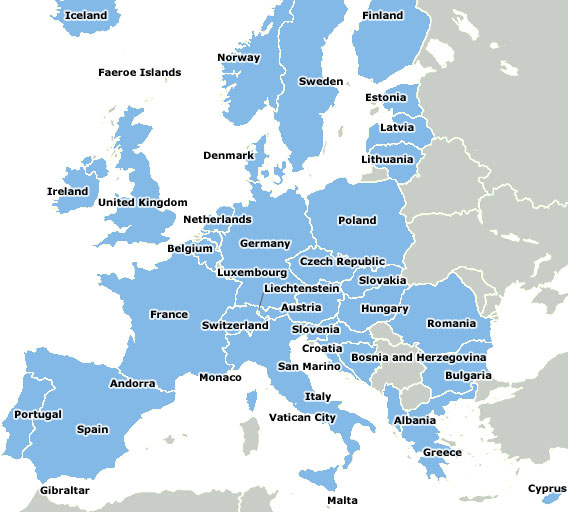
Frequent travelers know the headache and high cost of global “staying connected” while travelling abroad. Xcom Global recently solved this issue for travelers to Europe with their new EuroSIM. It enables US travelers to rent a device that will provide unlimited data connectivity in 40 European countries.
They are renting a MIFI for $US14.95 a day (provides connectivity for up to 5 devices) or a USB WWAN for $US12.95.
DEALING WITH CHINA (PART 3)
The importance of “Saving Face”
Having spent many years in Asia, I quickly learned the importance of maintaining “face” when dealing with Asian businessmen. This becomes important when engaging in negotiations (for example). You must always allow the other participant to have a little wiggle room [even after submitting their best offer]. Even tough the new offer may be only minimally better, it should allow the Chinese participant (whether customer, partner or other) to have the final say and maintain face.
Interesting read : Wikipedia
Working with imperfect information
It’s no secret that information does not flow freely in China and local culture dictates that negative information should be suppressed as much as possible.
The National Bureau of Statistics publishes a giant manual called the China Statistical Yearbook. It contains all kinds of goodies for interested parties from the amount of residential floor space built to the amount of cargo carried by Chinese shippers. All wonderful and interesting stuff…
Foreign statistical experts I have spoken to question the validity of the information contained therein. They state the pressure on local officials to constantly show improving performance thus the motivation to “inflate or deflate” the published numbers. The delta from reality is sometimes small and other times extremely large. There is no way to tell for sure.
It is believed that a better source of information is the World Bank and Asian Development Bank reports.
Conclusion
Even with all of it’s pitfalls, China is still the land of possibility and most business’ will choose to embark on the path of the Dragon. Remember to measure twice and cut once. Spend as much time as you need at the start of your endeavor to ensure it ends up the way you want.
DEALING WITH CHINA (PART 2)
... continuation
Intellectual Property
The previous paragraph highlighted the difference between laws “on the books” and the extent to which business people are willing to bend them for profit. As a foreign company entering into the Chinese market, you should be thinking about how you will protect your Intellectual Property.
A common example of this is that of Will-Burt. Will-Burt is a company that manufactures and sells Night-Scan telescoping masts for police or military use. They entered the Chinese market and sales boomed. Then all of a sudden, the sales stopped. It seems a local company had reverse engineered their products and was selling perfect replica fakes. They went as far as printing Will-Burt’s name on the counterfeit products and presenting them at a local Chinese trade show. The irony is that its prime customers are law enforcement and military who seemed to be choosing the cheaper counterfeits.
Because of international pressure, the Chinese government is trying to fight IP theft and counterfeiting but it is an uphill battle. There are well entrenched officials and powerful Chinese business leaders who like things just the way they are. As a company entering the Chinese market, it is important to understand that you may have to spend buckets of money to defend and safeguard your corporate IP assets.
When in Rome, do like the romans
Anytime you are dealing with a foreign entity (partner or customers), it is important to learn as much about their local customs as possible. In North America, when I hand someone a business card, they likely take it with one hand and shove it into a pocket. In Asia (particularly in China), the custom is to accept someone’s business card with 2 hands, then read it carefully and present a genuine compliment related to it, the business or the neighborhood the business it located in.
There are also topics that will be cheerfully welcome and others that will be shunned (like Taiwan, Tiananmen Square, Tibet, Japan, etc). It is important to work with a local contact who can provide guidance and support as it relates to this section.
Many western educated Chinese are now returning home and taking prominent business positions in local companies. You will find it much easier to work with these younger Chinese managers as they are more likely to accept your western ways.
... to be continued
How human needs influence motivation
Human needs psychology teaches us that all human motivation can be explained by the need to meet one or more of these primary needs:
- Certainty
- Variety
- Significance
- Connection and love
- Growth
- Contribution
Anytime you are in an interpersonal relationship whether to close a sale or coach an employee, it is important to understand which of the needs (one or many) are motivating the other person. Each need is met differently so take the time to think about it.
Simple concept but very powerful.
Dealing with China (part 1)
If you have spend any time at a multinational company, the one topic that comes up is how to benefit from the rise of the dragon (aka China).
Over the next couple of entries, I will provide some information about China that I hope you will find useful.
The socialist impact
Although it is easy to overlook China’s socialist political system, it is important to understand that it influences every aspect of their business style. As an example, they have very little creditor protection. They would never allow a big capitalism company to throw poor helpless citizens out of their homes because of missed payments. This is one of many such examples where companies are disadvantaged because of the ingrained policies and beliefs.
A police state does not equal a lawful state
It is important to understand that most of China is in a state of lawlessness. Corruption is rampant and businesses routinely ignore laws. One of the most obvious examples is software piracy. Although China has software anti-piracy laws, they are rarely enforced.
In a partnership setting, I warn companies to be cautious when dealing with Chinese businessmen. It is common for them to use the complicated Chinese legal system and culture to their advantage (eating the investment without giving you anything in return). To be clear, partnering with a local entity means you get know-how and contacts very quickly and this can be a huge strategic advantage. It is important to be extremely careful when conducting your pre-deal due diligence before entering into the agreement.
... to be continued
Consumers slow to adopt mobile payments
Gartner released some interesting statistics and predictions related to the mobile payment market. They estimate that 141.1 million people (around the world) will make some type of mobile payment this year. This would be a 38.2% increase over last year. Gartner estimates that this will account for $86.1 billion in transactions.
Although the growth is very respectable, Gartner does say that growth has been slower than expected because of slower than expected uptake in developing countries. Possible causes to the slower than expected adoption may be:
- the complexity of the NFC (Near Field Communication) service model
- this model requires a shift in consumer behavior from using cash and cards to using your phone to make payments.
Gartner research director, Sandy Shen, believes that mass adoption of NFC is at least 4 years away. Gartner predicts that merchandise purchases will account for 90% of mobile transaction in 2011.
Full Press Release:
Gartner Says Worldwide Mobile Payment Users to Reach 141 Million in 2011
Mobile Payments in Developing Markets Growing Slower Than Expected
STAMFORD, Conn., July 21, 2011—
Worldwide mobile payment users will surpass 141.1 million in 2011, a 38.2 percent increase from 2010, when mobile payment users reached 102.1 million, according to Gartner, Inc. Worldwide mobile payment volume is forecast to total $86.1 billion, up 75.9 percent from 2010 volume of $48.9 billion.
Despite these strong growth projections, Gartner analysts said the mobile payment market is growing slower than expected.
“In developing markets, despite favorable conditions for mobile payment, growth is not as strong as was anticipated. Many service providers are yet to adapt their strategies to local requirements, and success models from Kenya and the Philippines are unlikely to be translated to other markets,” said Sandy Shen, research director at Gartner. While developing markets have favorable conditions for mobile payments, such as high penetration of mobile devices and low banking penetration, this is no guarantee of success, unless service providers adapt their strategies to local market requirements.”
"In developed markets, companies are trumpeting the prospects of Near Field Communication (NFC) without realizing the complexity of the service model. We believe mass market adoption of NFC payments is at least four years away," Ms. Shen said. "The biggest hurdle is the need to change user behavior by convincing consumers to pay with mobile phones instead of cash and cards."
Gartner expects Short Message Service (SMS) and Unstructured Supplementary Service Data (USSD) to remain the dominant access technologies in developing markets due to the constraints of mobile phones. Wireless Application Protocol (WAP) will remain the preferred mobile access technology in developed markets, where the mobile Internet is commonly available and activated on the phone. Mobile app downloads and mobile commerce are the main drivers of WAP payments, and WAP will account for almost 90 percent of all mobile transactions in North America and about 70 percent in Western Europe in 2011.
Money transfers and prepaid top-ups will drive transaction volumes in developing markets. These are seen as the "killer apps" in developing markets, where people value the convenience of sending money to relatives and topping up mobile accounts. This is most obvious in Eastern Europe, the Middle East and Africa, where these two services will account for 54 percent and 32 percent of all transactions in 2011.
"Thanks to the success of mobile application stores, such as Apple's App Store, and the efforts in driving mobile sales by major retailers, such as Amazon and eBay, merchandise purchases far outweigh other use cases in developed markets, which include North America and Western Europe," Ms. Shen said. "We predict that in 2011, merchandise purchases will account for 90 percent and 77 percent of all transactions in North America and Western Europe, respectively."
Additional information is available in the Gartner report “Market Trends: Mobile Payments Worldwide, 2011." The report is available on Gartner's website athttp://www.gartner.com/resId=1714114.
Twitter for marketing and Public Relations (PR)
When I first discovered Twitter, I thought it was the stupidest thing in the world. After all, how can you effectively communicate in 140 characters. Would it be worthwhile to follow others? I just did not understand it. Then after playing with it for a while, I finally understood it s value and power. It has started revolutions and has helped companies build direct relationships with their customers.
Twitter uses related to Marketing and Public Relations (PR)
Executive proof I have worked with dozens of large multinational companies whose CEOs started blogs [to communicate directly with their customers and employees] but gave up after a handful of posts. Some gave up because they were old school and did not understand the usefulness. Most gave up because they simply didn t have the time to write a new essay every couple of weeks.Twitter is great because it forces you to stay on-topic with 140 characters or less. Even the busiest CEO can find time to create a short message. Also the technology is familiar to anyone who has used SMS. So no technology shock.
Keep in touch with influencers This is a great way to connect with influencers in your area of expertise. You will get an inside edge into what they are thinking about and more often than not, they will follow-back which gives you an entirely new way to interact with these highly prized individuals.
Listen to your customers Anytime I think of social media well used, I think of a company called Scottevest and its CEO Scott Jordan. Scott uses twitter to share all kinds of company information with the world (from daily specials to offices they visited for a recent relocation). He makes every customer [that follows him] feel like part of the company . He also uses social media to ask for new product ideas and to get direct (and cheap) customer feedback for new ideas. You can follow him : @Scottevest
Monitor your company or competitors Twitter is a great way to get a feel for the social mood about your company, a competitor or supplier. You will be surprised at how quickly twitter reflects just-in-time developments.
Promotions This is a great way to share specials or other promos with interested parties. It is free, fast and very efficient. We are all deluged by hundreds of emails a day so a twitter note may get more attention.
Just in Time communication If you are attending or organizing an interesting conference, chances are people will live blog about it on twitter. This is a great way for your event to reach potential new customers. Knowing this, you may want to invite some live bloggers and make sure they have reliable WIFI.
Conclusion
Twitter isn t perfect but it is pretty cool. Every morning, I spend about 30 minutes going through tech blogs, news sites and twitter. It has proven so useful to me that it is part of my daily regimen now. Hopefully I have given you some new ideas on how to use twitter.
As always, if you have comments: SHARE!!! SHARE !!! SHARE !!!
Pittsburgh Pattern Recognition has been acquired by Google

Google has quietly acquired a Pittsburgh company that has technology related to facial recognition. The company, PittPatt, was founded and run by 3 Carnegie Mellon University PhDs. No one really know why Google made the purchase or where/when it will be used but it is safe to assume it will be one more tool in their anti-Facebook crusade.
We will be anxiously waiting to see how this “computer vision technology” will be implemented and deployed while adhering to Google’s mantra “Do no evil”.
Source: PittPatt
Could Apple make a bid for HULU?
Bloomberg reported [on Thursday] that Apple is considering a bid for video streaming site extraordinaire – HULU. HULU announced that they have retained the services or Morgan Stanley and Guggenheim partners to assist with the potential sale of the company.
About 2 years ago, the interwebs were buzzing about Apple starting a new streaming Television service. Obviously that never got off the ground. Could this be the missing piece to the puzzle?
This new rumor is in addition to the others we have already read about other potential suitors, mainly Yahoo,Google and Microsoft.
Source: Bloomberg
Please like my new profile on Facebook
Please LIKE my new FB page :
https://www.facebook.com/pages/Edward-Kiledjian/260687717281559
I will use it to answer your business questions, post cool or useful links and even run some future contests.
I really appreciate your support.
Review of the free scan to cloud software - ScanDrop
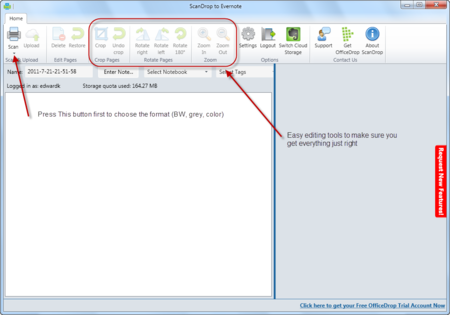
I am a big fan of Evernote and use it to store all of my reference material (as explained in the GTD methodology). One of the key requirements to my online storage strategy is converting paper into PDF and getting it into Evernote as simply and quickly as possible.
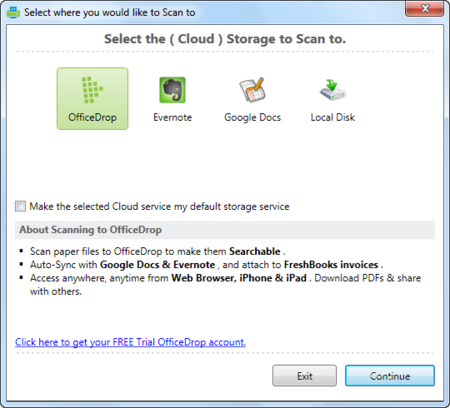
A while back I found a free software called ScanDrop which did exactly that. I use it to scan paper directly from my Brother multifunction device and then upload it straight into my Evernote [For Google Docs users, it supports that service too] inbox ready for processing. It supports a whole range of scanners.
Main Window - Click to see full size
Cloud Service Selection Window
Conclusion
Did I mention it's free? Sure there are features missing but it meets 98% of my daily scanning requirements. They do have a Mac version but it costs $9.99 from the Mac AppStore (I still think it's worth it at that price).
I know some may be wondering how I use Evernote as my GTD reference system, I will cover that in a future entry.
1 Million downloads of Mac OS Lion on its first day
We all expected LION to do well at $29.99 but few people could have foreseen the incredible volume of downloads in the first 24 hours. Apple claimed this was the "best OS we've ever made" and the numbers seem to back their claim.
As you may be aware, LION is a download only product from Apple's Mac AppStore. For those that have slow or capped internet service, you can download it at any Apple store by simply bringing your device in using their free WIFI. Some wanted more so Apple delivered, in the next couple of weeks, you will be able to buy a version on a USB key for $69.
The wacky world of Google+ (aka Google Plus)
I was finally able to get into Google Plus about a week ago and my overall rating is that it is interesting but....
For those of us that played with other ill-fated Google products (such as Buzz), it is refreshing to see that they learned their lessons.
The Interface
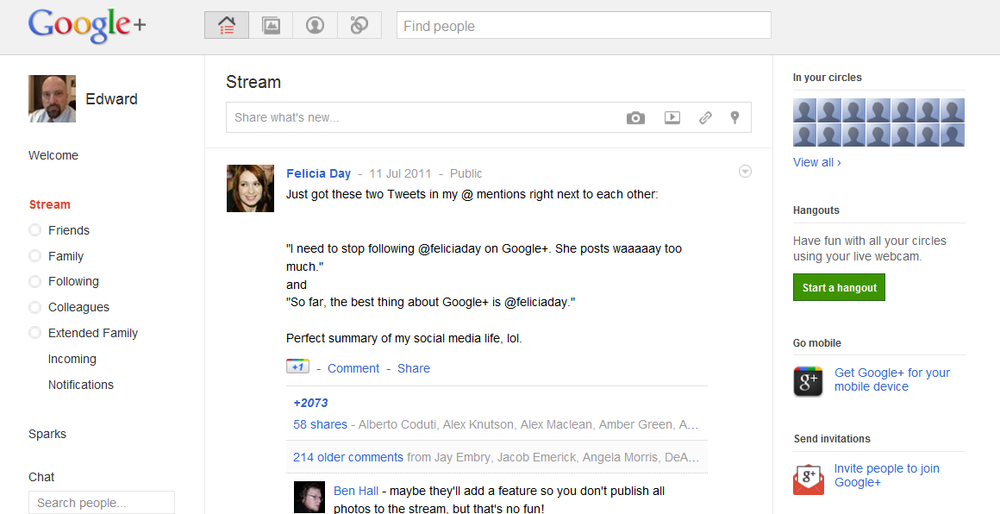
As you can see, Google has used a clean and easy to understand interface however it will take some getting used to. Dozens of prominent tech bloggers complained that Google Plus is simply a different looking Facebook. Some unpopular Google products attempted to use crazy new interfaces that simply confused customers and ultimately lead to the product tanking. With Plus, Google wanted to the familiar feel of social networking (Facebook, twitter et al) while extending many of its functionalities.
Circles
It is obvious that Google has made privacy and content distribution control a priority. Unlike Facebook, you add your contacts to different Circles (think of these as groups) and then can share content in a very granular way. In my tests, I ended up with these Circles.
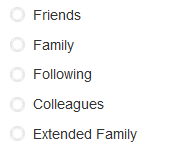
Adding, removing or checking Circle membership is as easy as dragging contacts in and out of a circle.
When posting a status update (or picture or movie), I decide which circle to share it with:
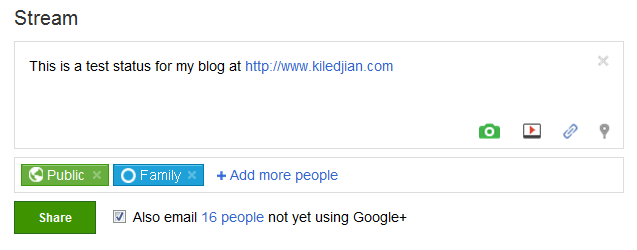
In this case I added the public Circle (which would share it with the whole world) and the Family Circle (to show you how it would be done). Remember I can add as many circles as I want. This means that you can share your vacation pictures with your family and the business conference ones with your co-workers.
Most people I work with are stressed when colleagues or bosses ask to be friends on Facebook. Do you accept and allow them access to your private life or refuse making the relationship awkward. Sure Facebook offers some controls to work around this but they are not this granular, they are difficult to understand and use.
Sparqs is cool
I won't be reviewing each of the features of the site but I thought Spars was cool enough to discuss here.
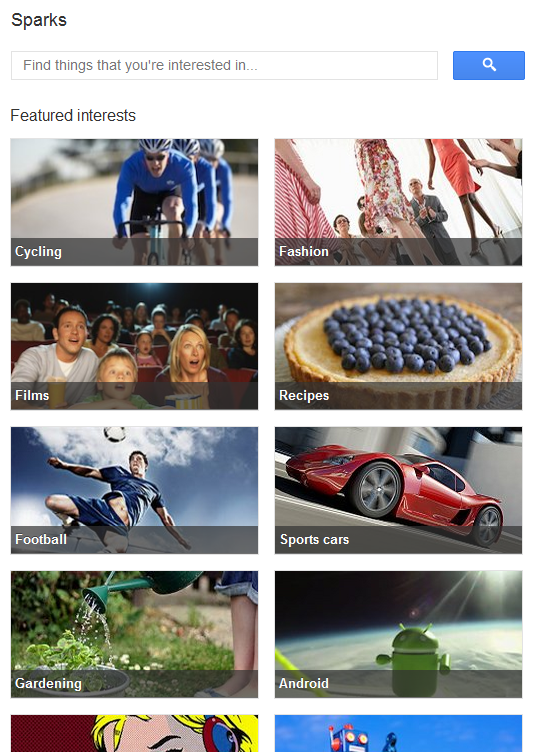
Many have said Google Plus feels like a prettier version of Facebook + Twitter and this fairly accurate. Sparqs leverages Google's +1 feature and creates a brand new recommendation engine. This is one of those features that will either do phenomenally well and help propel Google plus or it will be overlooked and die. It is very cool and should be looked at.
Searching for "Google Plus" in Sparqs returned:
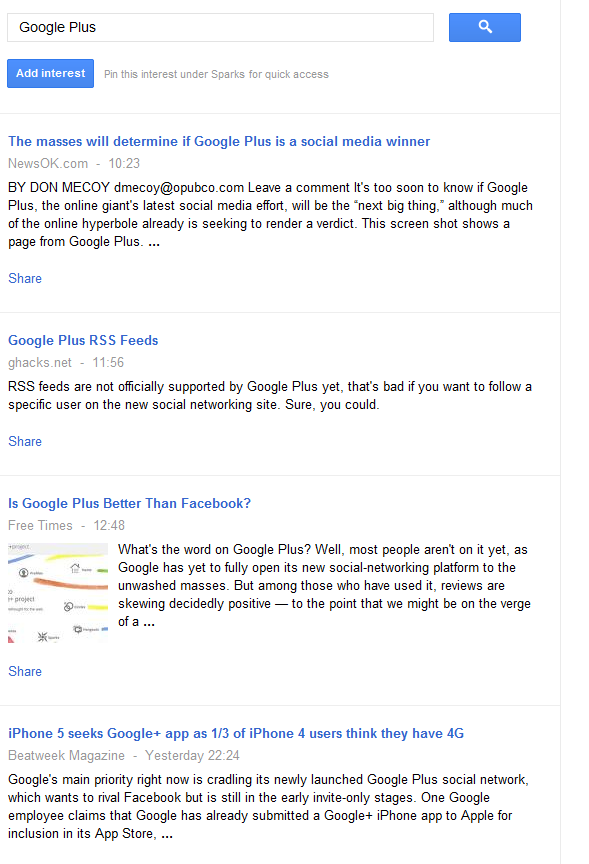
Obviously as you use their content rating system (Google +1), the content it will present will become more relevant and customized for you. Ultimatey if enough people start using Google+ and Sparqs, it could replace other sites like Digg or Slashdot. This has the potential to be a real game changer.
Conclusion
There are other features like Hangout which is intelligent multi-person video chatting and Photos but the purpose of this entry was to share some general thoughts. Ultimately I did not see anything that would make this a Facebook killer. It is a well designed and thought out social networking site that could be the next big thing if Google can convince enough people to join and add content. The key question is "Is there a killer feature that would win members away from Facebook?". I haven’t seen anything that would be considered a killer must have feature.
They will likely use all of their internet might to lure users to Plus by integrating their various products into it (GMAIL, Picasa, Reader, etc). This won't happen overnight but it is something I am expecting. Remember that the social networking sites don't add any value themselves. The only reason Facebook is so popular is because of the 750 million users adding tones of content contacts want to see. If Google can't get a large number of users to join then this will be an abysmal failure.
My favorite feature is the granular and easy to use privacy features. Hats off to Google for that.
If anyone wants invites, send me a note using the contact me page. I will invite as many of you as I can before they stop sending them out again.
GHSA determines road risk of using a mobile phone while driving
Risk Management when outsourcing (part 3)
Do I own the risk for outsourced activities?
The most common misconception I have to deal with is customers that believe they “offloaded” a risk because the process or function was outsourced. Stand up and yell the following as loud as you can
“Outsourcing an activity does not mean an organization has avoided the risk”.
Many would argue that they have SLAs and penalties so the outsourcer is responsible.
Generally penalties in a contract are motivators to perform but rarely compensate the customer for their full loss (for the occurrence of a business disrupting risk). Ultimately your are still responsible for the performance of your vendor or lack thereof. You should continue to monitor and manage risk.
Risks from outsourcing
Outsourcing does bring with it some additional risks that you should consider and analyse.
- Concentration Risk - This is the risk caused by concentrating too many services with a very small number of providers. You have plenty of tools to manage this risk from business impact analyses, control evaluations and business continuity plans.
- Jurisdictional Risk - It is risk driven by the localization of service delivery. Many non American companies may be relying on US based outsourcing providers for some of their processes. What if this data is stored or backup up to one of the providers US datacenters? Does this data now become subjected to the US Patriot Act? Microsoft even admitted that data kept in their non-US locations is subject to the Patriot act. How would this impact your business decisions? It is important to consider the laws and regulations related to the business you are dealing with or the locations services are being delivered from.
-
Contractual Risk - Since it is one of my favorite risk topics, I am going to spend a little more time talking about it. When thinking of contractual risk, there are many theories that may come into play including:
- Transaction Cost Theory – Where the decision is based on the specificity of the asset, the uncertainty of the transaction and the frequency of the transaction. Specificity generally drives longer term contractual lock in to prevent the provider from withdrawing their services. The more a companies tries to contractually manage these risks, the more costly the contract becomes.
- Agency Theory – This theory describes the difficulty of choosing an agent, motivating it, and managing its behaviour. The client wants the outsourcer to perform the required tasks but contracts are very rarely all encompassing. In this model, the agency costs include the cost of writing and supervising the contract, plus the cost of inadequate motivation resulting in inadequate delivery.
- One of the possible issues related to agency theory is called moral hazard and results from the fact that the principal (you) cannot obverse the agent’s (outsourcer) behavior at no cost (aka you can't supervise everyone all the time). Knowing this, suppliers can blame poor performance on a series of exogenous causes. Another possible issue can be conflict of interest where the agent operates in a less than perfect manner when representing the principles best interests (e.g. performing work slower to charge more).
-
Delivery Risk - This is the risk that the delivered service is deficient. The deficiency may be caused by:
- Delivered services do not meet your requirements - This may be the result of poor Statement of Work documentation, Improper contract write-up & interpretation, etc.
- Delivered services are of poor quality - Sometimes you may have done everything right but the delivered services are simply not up to par.
It is important to consider these during contract write-up and include remedy clauses to fix these issues if they occur. Many contracts I have reviewed do not include mechanisms to address these issue and the customer get's "hosed" by the provider during the contract change process.
- Pricing / Costing Risk - It is very common for customers to sign 5-7 year outsourcing contracts and then during contract start-up, they get shocked by unforseen charges for: transition costs, switching costs, higher service delivery costs [because of improper volume or scope assumptions], etc. Make sure that the provider bears the risk for any unforseen startup costs. Make sure your contract has fair provisions for cost changes due to different [than planned] volume or scope.
- Risk of incompetence - When an organization decides to outsource a particular service they most often terminate or transfer all of their internal staff with that specialization. Those that stay in the organization are not nurtured and their skillset will also blunt with time. Although shedding these resources is usually done by design, I have to reminder customers that when these skills are core to their business, they should keep a select group of senior resources to supervise, lead and provide backup in the event of irreconcilable differences arising. You should always be able to walk away if things go wrong.
Conclusion
There is no magic bullet or rule of thumb I can share that will guarantee your outsourcing activities will be the fairy tale you are expecting. Reality is that every situation is different and every negotiation requires special analysis and consideration. I hope I have given you some food for tought.
Overall though, my preferences have changed slightly [over the years] and there are ideas you may find helpful:
- Move from a single sourcing model to a multi sourcing one. Force vendors to compete for each major project against your internal costs, the other vendor and the outside world. If 2 vendors have to work together, make one the main provider who is responsible for process integration between them and the other providers. If this is not possible, you have to play the role of "the glue" and ensure everyone agrees to Operating Level Agreements.
- Identify the most critical clauses in the contract and negotiate to have then reviwed annually. Never fix a contract in stone for 5 years.
- Although most vendors will try to lock you into longer term agreements, I recommend you never exceed the 5 year mark. On IT infrastructure deals, I may often recommend sticking to a 3 year deal or a 5 year one with an exit clause for major technological change (i.e. release of Windows 9 which should change the entire IT delivery model).
- Find a low cost way to maintain control over the delivery quality of your outsourcer. Understand that the standard SLA report is a snapshot in time and is often too high level to be useful. You should find other near-real-time metrics that can be used and have appropriate leverage clauses.
- Negotiate some of the cost risk to the outsourcer for “reasonable but unforeseen costs” to ensure they disclose any potential issues they may see but choose to keep quiet.
- Bring on an outside expert to provide guidance and advice.
Risk Management when outsourcing (part 2)
This is a multipart discussion that will be posted over the next several days.
Understanding how your company seems risk and the different types of risks will allow you to frame your risk management efforts with the proper light. Defining whether your risks are endogenous, exogenous or both is also critically important.
Managing Risks
The next question that comes up is “how do I handle risk?” For the purposes of our discussion:
- Do Nothing
- Hedge the risk by investing in risk mitigation processes, technologies and tools
- Transfer the risk via insurance or securitization
- Switch to a provider with a “better” risk profile
- Exit the business or relationship generating the risk
The debate about outsourcing
No matter how thin you slice a piece of bread, there are always 2 sides. Even though most business professionals believe that outsourcing is a tool that allows them better control over cost, service and risk, some still believe outsourcing is bad and should be avoided.
On one side we have a clear presentation of business benefits[1] such as:
- Lower costs
- Economies of scale
- Access to specialized resources
- New business venture opportunities
Opponents have stood their ground claiming [2]:
- Escalating costs
- Diminishing service levels
- Loss of expertise
Having helped organizations outsource for the last 15 years, trust me when I say outsourcing can deliver extremely positive returns if negotiated and implemented properly. One of the key drivers to proper implementation is a strong risk management framework. When outsourcing deals “go bad”, it usually stems from:
- The customer has not properly defined what they really wanted.
- The outsourcer did not properly understand what was being asked for.
- The contract does not properly define the agreement which leads to disagreements (both scope and financial.
All of these can be avoided if overseen by a manager that understands and is able to manage risks.
Reference:
1. Gupta, U. G. and Gupta, A., “Outsourcing The IS Function: Is It Necessary for Your Organization?,” Information Systems Management, Summer 1992, pp.44-50
2. Earl, M. J., “The Risk of Outsourcing IT,” Sloan Management Review, Spring 1996, pp.26-32
Stay tuned for part 3 tomorrow
Some Interesting Twitter Statistics for 2011
Here are some interesting twitter stats I wanted to share
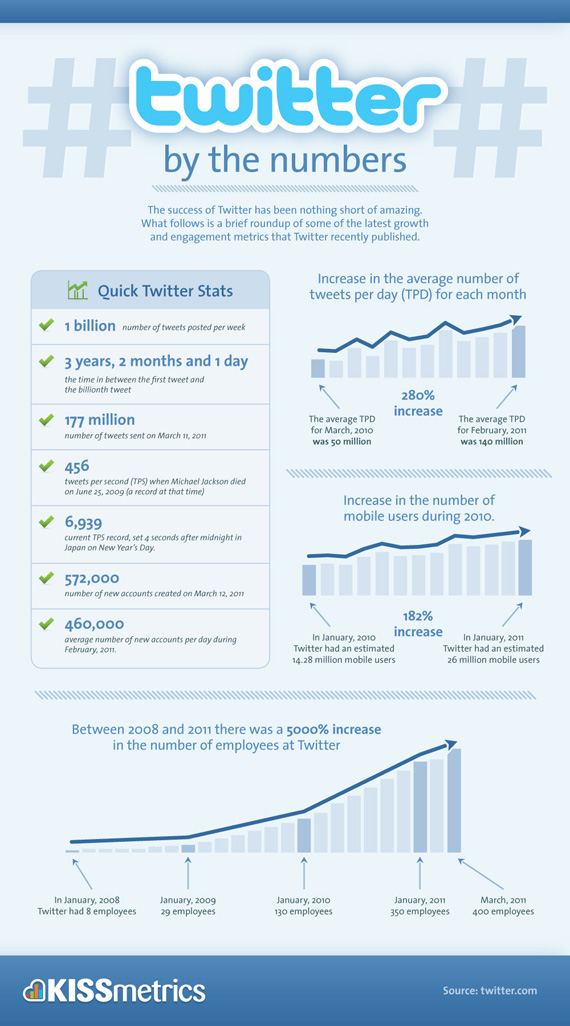
We can then take a look at some interesting site statistics provided by Compete :
Twitter.com had:
- 28,741,503 Unique Visitors in May 2011
- 148,742,825 Total Visits in May 2011
1 year graph comparing unique visits to total visits:
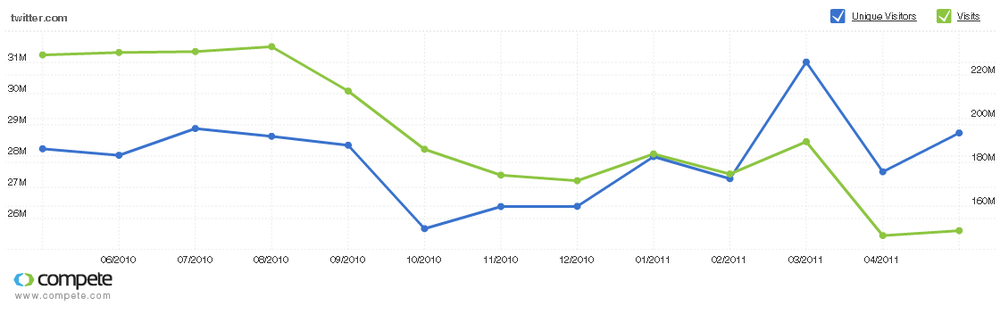
Click on the above thumbnail to see a full size image.
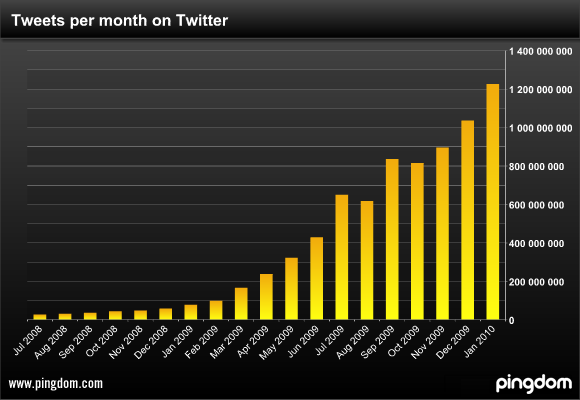
Pingdom has created a nice graphic showing the growth in tweets per month. This includes all tweets (including those made with 3rd party apps):
Risk Management when outsourcing (part1)
This is a multipart discussion that will be posted over the next several days.
Over the last 5 years, I have seen a huge surge in the number of companies adopting formal risk management frameworks and methodologies. This is sometimes driven by regulatory requirements and other times by experienced executives that understand the importance of risk management.
I wanted to take a quickly look at risk management in the context of outsourcing.
What is risk?
The definition of risk is intuitive but can be summarized as “an event that may have a material impact on your business and its success or desired outcome”.
How does your company view and measure risk?
Depending on your industry, you can adopt one of the following risk management models:
- Risk as a probability This applies to organizations that measure risk as a likelihood that something may occur (i.e. an insurance company determination your risk of dying early because of lung cancer). Organizations adopting this approach will collect performance data and built likelihood tables to judge risk.
- Risk as a variance This applies to organizations that measure risks as a likelihood that the outcome may differ (delta) from a distribution. This is often the approach used by banks and investment companies. Organizations adopting this approach will base their “risk tolerance” on the expected return. The higher the return, the more volatility they are willing to accept.
- Risk as an expected loss This is the most common risk model adopted by organizations and is a loss function multiplied by a probability function. As an example, the impact that your cash will catch fire in a bank's vault is catastrophic but when multiplied by the likelihood of it actually occurring, it become negligeable.
Types of risks
There are 2 types of risks that your company may be subjected to (each with its own mitigation strategy):
- Exogenous risk is risk on which we have no control. It is risk that is unaffected by our actions. Great examples of this are the revolts in Egypt, the tsunami in Japan or an earthquake.
- Endogenous risk on the other hand is risk that is influenced by our actions or decisions.
When playing Russian roulette in a casino, the actual risk related to a result number other than the one I have chosen is exogenous and out of my control. Risking my capital by playing Russian roulette is an endogenous risk because it is a result of my actions.
Stay tuned for part 2 tomorrow
Facebook has identity and your attention
Facebook has become the premium identity management company on the web with 500 million+ users. Just think of how many apps allow you to log-in using your facebook ID (aka Facebook Connect). In late 2010, Sheryl Sandberg (Facebook COO) stated that 10,000 websites integrate with Facebook everyday (that is over 3.6 million new sites every year).
Facebook knows who you are, what you like, who your friends are, where you have been (Places) and what you are thinking about (status updates). Do you think that helps when targeting advertising?
Remember that Facebook posts are [mostly] off limits to search engines which means Google can’t leverage your info to sell search, offer their services, create user profiles for better targeting, etc.
They want to know who you are and what you like so that they can profile and target you more accurately.
How much time do you spend on Facebook as opposed to checking email, searching the web, etc? Comscore says the average user spends 375 minutes per month browsing Facebook and only 231 minutes on Google services.
This “lost screentime” for Google means less opportunity to advertise.
Many users use to search the web for provider recommendations (aka doctors, lawyer, restaurants, barbers, etc), but now turn to their network on Facebook.
Facebook is now the number 1 source for product and service recommendations
Google is not standing still and is willing to try almost anything to convince you to move your identity over to them. They released +1 and opened Google Plus (Google+) to a limited beta group.
They also understand that in the next 5 -7 years, our mobile phones will become hub of our digital identity. As more and more users shift to smartphones, a new opportunity may open up identity management domination (Apple, Google or HP). Don’t forget every iPhone or Android device requires an ID with the publisher to work.
IDC predicts users will download 183 billion apps by 2015
June 28 2011, IDC released an interesting report entitled “Worldwide and U.S. Mobile Applications, Storefronts, Developer, and In-App Advertising 2011–2015 Forecast: Emergence of Postdownload Business Models”.
They make a bold prediction that users will download 183 billion apps by 2015 (compared to 10.7 billion in 2010). They further predict that the revenue model is changing from the traditional model (fee charged during initial purchase) to a freemium model (where the app is free but users may purchase additional functions though in-app purchases and advertising).
A September 2010 Pew report suggests that 35% of the US adult population has a phone with applications. They further refine the statistic by stating “that means that 24% of U.S. adults are active apps users”. App users are also desirable consumers because they “[…] are younger, more educated, and more affluent than other cell phone users”.
Combine all of the above and it is clear that apps are money makers and are here to stay.