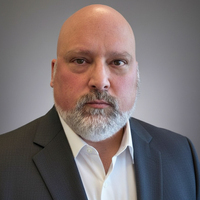
Who is Vladimir Putin

Vladimir Putin was born in Leningrad, Russia, on October 7th, 1952. His father was a factory worker, and his mother worked as a nurse. During his childhood, he experienced many hardships living during the Soviet Union era when food shortages were common and living with political turmoil at home. He grew up admiring Joseph Stalin and dreamed of being an intelligence officer like him in the KGB (Komitet Gosudarstvennoy Bezopasnosti). He achieved his goal by joining the KGB right after high school, where he quickly rose through the ranks and became one of the youngest officers to be appointed at headquarters in Moscow.
In 1985, as communism was starting to lose its grip on power, Putin was sent to work in Dresden, East Germany. He worked there right before the fall of the Berlin Wall and experienced first-hand how divided Germany was at that time. He witnessed the protests against communism and started to feel disillusioned with the system he had previously believed in so strongly.
After returning from East Germany, Putin became heavily involved in politics when Boris Yeltsin rose to power after Mikhail Gorbachev was ousted as leader of the Soviet Union. Putin became Chief Adviser for Yeltsin’s government in 1996 and helped him consolidate his power as president until 1998, when Yeltsin appointed him Deputy Chief of Staff. By 1999, he was named Prime Minister under Yeltsin’s presidency, but he quickly began to consolidate power for himself.
In 2000, Putin was elected President of Russia after Yeltsin resigned. He then began to change the Russian Constitution to stay in power for as long as he wanted. In 2008, he was re-elected for a second term and served until 2012, when he stepped down due to term limits. He then became Prime Minister again and remained in that position until 2018, when he was elected President for a fourth term.
Under Putin’s leadership, Russia has become a major world power once again. His policies have been controversial, but there is no doubt that he has changed the course of Russian history. He has been praised for restoring Russian pride and fighting against Western imperialism, but he is also criticized for his aggressive foreign policy, authoritarian rule at home, and questionable human rights record. Regardless of how history will judge him, Putin’s life story continues to fascinate the world.
Additional information
What was the KGB?
The KGB, or Komitet Gosudarstvennoy Bezopasnosti, was the main intelligence and security agency of the Soviet Union. It was responsible for conducting espionage, counter-espionage, and monitoring internal and external threats to national security. Vladimir Putin joined the KGB right after high school and worked his way up through its ranks until he eventually became one of its most senior officers at headquarters in Moscow. He had a long career in the KGB, which helped shape his views on politics and foreign relations.
What was the Soviet Union?
The Soviet Union was a socialist state in Eurasia from 1922 until its collapse in 1991. It was made up of 15 Soviet republics and included many different ethnic groups and languages, but the country's official language was Russian. The economy of the Soviet Union relied heavily on industrialization, agriculture, and mining, but it also struggled with underdevelopment and poverty during its later years.
When and why did the USSR collapse?
The USSR collapsed mainly due to growing political and economic instability brought about by internal dissent, an arms race with the West, and popular revolutions in neighbouring countries. By the late 1980s, protests against Soviet rule became widespread across the country, and Mikhail Gorbachev, who was the leader, tried to introduce reforms that would modernize and liberalize the economy and preserve the communist rule. However, these reforms were ultimately unsuccessful, and by 1991 the Soviet Union had dissolved entirely.
How was Soviet communism different than Chinese communism?
Soviet communism differed from Chinese communism in several key ways. For one, the Soviet Union was a highly centralized state with heavy government control over all aspects of economic and political life, whereas China was more decentralized and allowed for some degree of private enterprise. Additionally, the leaders in power in each country had very different ideological beliefs and approaches to governing. While both countries were communist states with socialist economies, they did not always see eye to eye on issues such as foreign policy or human rights. However, many of their differences stemmed from their unique historical contexts and experiences.
Chinese and Russian relationship
The relationship between China and Russia is a complex one. They are two of the world’s largest countries and share a long border, but they have had different experiences under communism. After the Soviet Union collapsed, Russia turned to the West while China continued to develop its brand of socialism. However, in recent years, their relationship has been strengthening as they both seek to challenge Western hegemony. They are now allies in many international organizations and often cooperate on trade, energy, and security.
Who was Stalin?
Stalin was one of the most influential leaders of the Soviet Union and played a major role in developing the Russian economy. He was born Joseph Vissarionovich Dzhugashvili on December 21, 1879, in Gori, Georgia. Stalin’s early life was difficult, and his childhood experiences would shape much of his later actions as leader of the Soviet Union. Stalin had to drop out of school due to health problems and poverty when he was young. His father abandoned him, which forced him to become self-sufficient at an early age. He worked various jobs to support himself, including selling goods on street corners.
In 1900, Stalin moved to Tbilisi, where he met a fellow revolutionary named Sergei Kirov. Stalin and Kirov became close friends and started working together as Marxist revolutionaries. By 1914, Stalin had become a prominent member of the Bolsheviks and was arrested for his revolutionary activities. He was exiled to Siberia but managed to escape in 1917 after the Russian Revolution.
After the Russian Revolution, Stalin quickly rose through the ranks of the Communist Party and eventually took control over the Soviet Union during Lenin’s illness. One of his first acts as a leader was to implement a series of economic policies to modernize Russia. These policies helped transform Russia from an agrarian society into a global superpower. Although these policies provided short-term benefits, they also caused widespread famine throughout Russia that is believed to have cost millions of lives.
During World War II, Stalin played a pivotal role in defeating Nazi Germany. He worked closely with U.S. President Franklin D. Roosevelt and British Prime Minister Winston Churchill to coordinate the Allied effort against Hitler. After the war, Stalin’s relations with the West quickly deteriorated as he began to implement policies designed to expand Soviet control over Eastern Europe. This led to the Cold War, a period of tension and conflict between the United States and the Soviet Union that lasted for almost 50 years.
Under Stalin’s rule, the Soviet Union underwent rapid industrialization and became one of the most powerful nations in the world. However, the brutal methods he ruled with also resulted in the death of millions of people. Stalin died on March 5, 1953, at the age of 73. Although he is often criticized for his brutal dictatorship, Stalin’s legacy continues to be debated by historians and political analysts.
Similarities between Stalin and Putin:
Both Stalin and Putin were born into poverty and had to drop out of school due to financial difficulties.
Both men rose to power through the Communist Party and played a significant role in shaping the Soviet Union.
Stalin and Putin both implemented policies that helped modernize their respective countries.
Both leaders are known for their brutal methods of rule and for the millions of people who died during their time in power.