
IOS 7 to debut at WWDC 2013
Apple AppStore almost at 50 billion downloads

Samsung Galaxy S4 available in Canada
Google's self-driving cars see 750MB of data per second
Google's Self-Driving Car gathers almost 1 GB per SECOND. Here's what it "sees" making a left turn: twitter.com/Bill_Gross/sta…
— Bill Gross (@Bill_Gross) April 30, 2013
Bill Gross snapped (supposedly) the above image at an XPrize event. He says on his blog :
"If it sees a cigarette butt, it knows a person might be creeping out from between cars. If it sees a rolling ball it knows a child might run out from a driveway. I am truly stunned by how impressive an achievement this is,"
The cars have logged over 300,000 miles and haven't had any accidents (while under computer control).
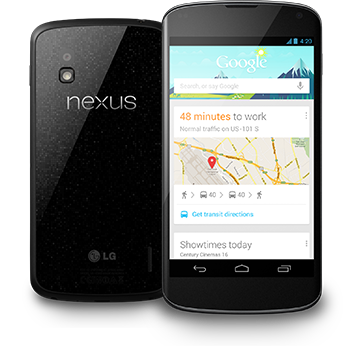
LG designing a new Nexus phone
Best rechargeable batteries
I often get emails asking me which rechargeable batteries I personally use... The answer is SANYO ENELOOP rechargeable batteries. I wrote a review about them here.
Hope this helps
Say hello to the world's smallest cell phone
Smaller is usually better but take a look at the world's smallest cell phone from Willcom, doesn't it look like a dolls accessory?
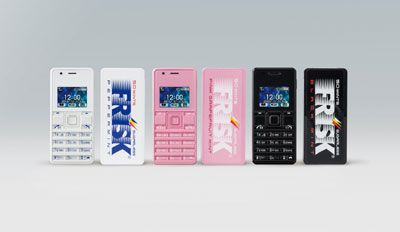
I'm guessing you won't be using this to snap pictures or play games but I'm sure someone somewhere on our big blue marbel may be looking for this type of diminutive device. The phone comes in white, black or pink and can be had for a cheap $380 in Japan.
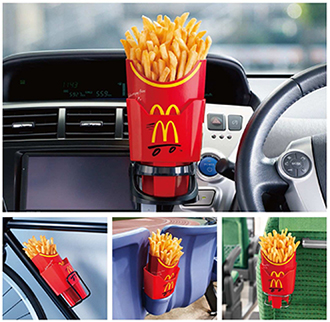
McDonald's french fry holder for your car
Wear this shirt for 100 days without washing it
Human powered Ferris wheel
Clench your hand to improve memory
"The findings suggest that some simple body movements -- by temporarily changing the way the brain functions -- can improve memory," Ruth Propper, researcher, Montclair State University.
Additional research will have to be conducted to determine if this action can help with other functions.
Google's Free Fonts now easier to download
The goal of Google Fonts has always been to bring beautiful, open-source fonts to the web, fast and free of cost. Starting today, you can download these fonts for offline access on your desktop. We’ve made all of the fonts from the Google Fonts directory available in SkyFonts, a tool from Monotype that allows you to install and sync fonts from the web onto your Windows or Mac OS X devices.
Google offer over 600 free fonts. You can download these for use today here.
Astrid Tasks acquired by Yahoo and will be shutdown

Astrid was a well designed software that whose loss will be felt in the productivity sphere.
Get Google Now on IOS !
Why Facebook created Facebook Home
Facebook Home finally clarified the company’s mobile roadmap. Facebook will integrate into existing smartphones and will not create a phone of its own (aka no Facebook phone). The new Android launcher rolled out in the US for select high end smartphones last week and ratings on the Google Play store show that it isn’t for everyone (44% of reviewers had given it a 1 star when I wrote this article).
What is Facebook Home?
Facebook Home is an Android launcher that “put’s people first”. It replaces everything you are use to with a launcher with an always in Facebook experience. Facebook Home works best on the HTC First (an HTC phone built specifically for Facebook Home) because it has been modified to allow Facebook Home to hook deep in the operating system, meaning you will get integrated notifications.
When will Facebook Home come to Canada
If you have the unstoppable urge to replace your functional Android Launcher with the over-reaching and always in Facebook Home launcher then you are in luck. Indications from Facebook lead me to believe that it will hit our shored in the next 30 days as long as they don’t experience major snags after the US launch.
Why did Facebook create Facebook Home?
Most reviews (I read) believe that this is a way for Facebook to provide a premium Facebook experience for its users without having to create a Facebook phone. I see it a little differently, especially when I consider where Google is going. Facebook wants to ensure it isn’t the next MySpace.
Most people believe Google+ is a ghost town but it has now become the second most popular social network (with 340 million monthly active users). Google was able to drive users to its competing product by slowly integrating it into all of its properties, improving the overall user experience, making it easier for users to find contacts and by adding the incredible active “Communities” feature.
- Facebook was built to help you connect with existing friends
- Google plus allows you to connect with existing friends but also has well designed features to help you find new and interesting people to follow
Google Plus has better security
I have discussed this point with dozens of Facebook users and none of them understand the Facebook user management system of lists. It’s complicated and not practical. Google+ uses an innovative approach called Circles. A Circle is a group of people you bunch together. A user can be in multiple groups. As an example, I have a circle called Business and add all of my business contacts to it. If a friend is also a business contact, he may be added to the Business circle and the Friend circle. Everytime you publish content, you choose what Circles to share it with (you can choose one Circle, multiple Circles, Public, etc).
Facebooks user grouping system is horrible (1 star) whereas the Google+ system is easy (5 stars)
Integrated with your other Google Services
You could be using Hotmail, Outlook.com or Yahoo mail but you are probably using GMAIL. You probably spend hours every week watching crazy videos on youtube and you certainly user Google's incredible web search.
Google has been integrating all of its services and Google+ has become the glue to bring them all together. Google+ is already integrated in every other Google property (normally on the upper right hand side) which makes it easy to share content, see content and get updates. It is much easier to use Google Plus (from an access perspective) than to jump to a new site and log into Facebook.
Google+ has a better mobile app
Almost all Facebook mobile users I talk to complain about the app. The Facebook mobile app is slow, buggy and not intuitive. Over the last 12 months, Facebook has moved to a mobile first model and has greatly improved the experience but most [honest] users will say the Google+ app provides for a much richer experience.
Your data is yours
Facebook makes it easy to get data into Facebook but very difficult to get it out. This is part of their strategy to make Facebook more sticky. Unlike Facebook, Google allows you to decide what it shows publicly (can be all, nothing or any point in between) plus they allow you to pack up and take back all of your data using their free Google Takeout. With a couple of clicks, Google will prepare a package that will include all of your data. Take it and go.
Your data after you die
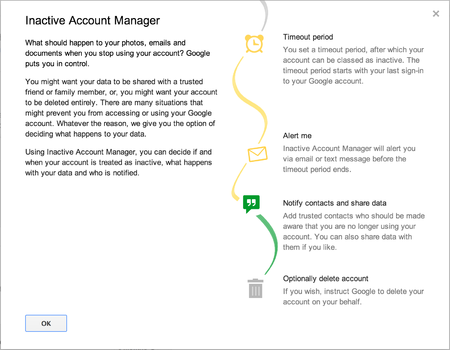
Facebook doesn't provide an easy way for you to determine what happens to your info after you die. Google has created the Inactive Account Manager. The Google Inactive Account Manager allows you to determine what happens (automatically) to all your Google data and accounts after a certain amount of inactivity (which you decide).
But why did Facebook create Facebook Home?
The latest rumor about Google Babbel seals the deal. It will be a cross platform, multi-device total communication system. It means you can chat, share documents or start a video chat session on any device and then continue it on any other (iphone, android, web via chrome, windows, mac, linux, etc).
Users are tired of closed system instant messaging systems and are demanding an anytime anywhere chat experience with Google Babbel is rumored to provide.
Google is technically superior. It is easier to find and share information. It is much more secure and now will offer the best messaging experience of any platform anytime anywhere. This final piece is what will continue driving users to Google+ (user numbers are the only thing Facebook has going for it).
This is what scares Facebook, it is a one trick pony. Google has a better social platform but also the best email system, the best video system, the best online document management system, etc.
With Facebook Home, Facebook is hoping to draw users into its closed system and make it more difficult to move away but reviews show it is failing.
You set your own limits

Continually push yourself to grow and improved or be pushed out. That is the nature of business.
If you can't then you must

If you feel you absolutely can't so something then you must do it to grow
Is faux skin mini furniture art?
Strange and disturbing was my reaction when I saw pictures of this mini furniture covered in faux (fake) human skin. There is a visceral reaction of fear and disgust when you see something covered in what looks like human skin.
To be clean, this is all fake material made to look like skin but still… it is disturbing. Why would anyone consider this art?



Source: here.
LinkedIn Buys the Pulse News Reader for $90M